



Photolyase is a DNA repair enzyme that uses blue light energy to reverse cyclobutane pyrimidine dimers (CPDs), the primary lesions UV radiation creates in skin DNA (Sancar, 2003, Chemical Reviews). Unlike sunscreen, which prevents damage, photolyase actively repairs damage that has already occurred (Berardesca et al., 2012).
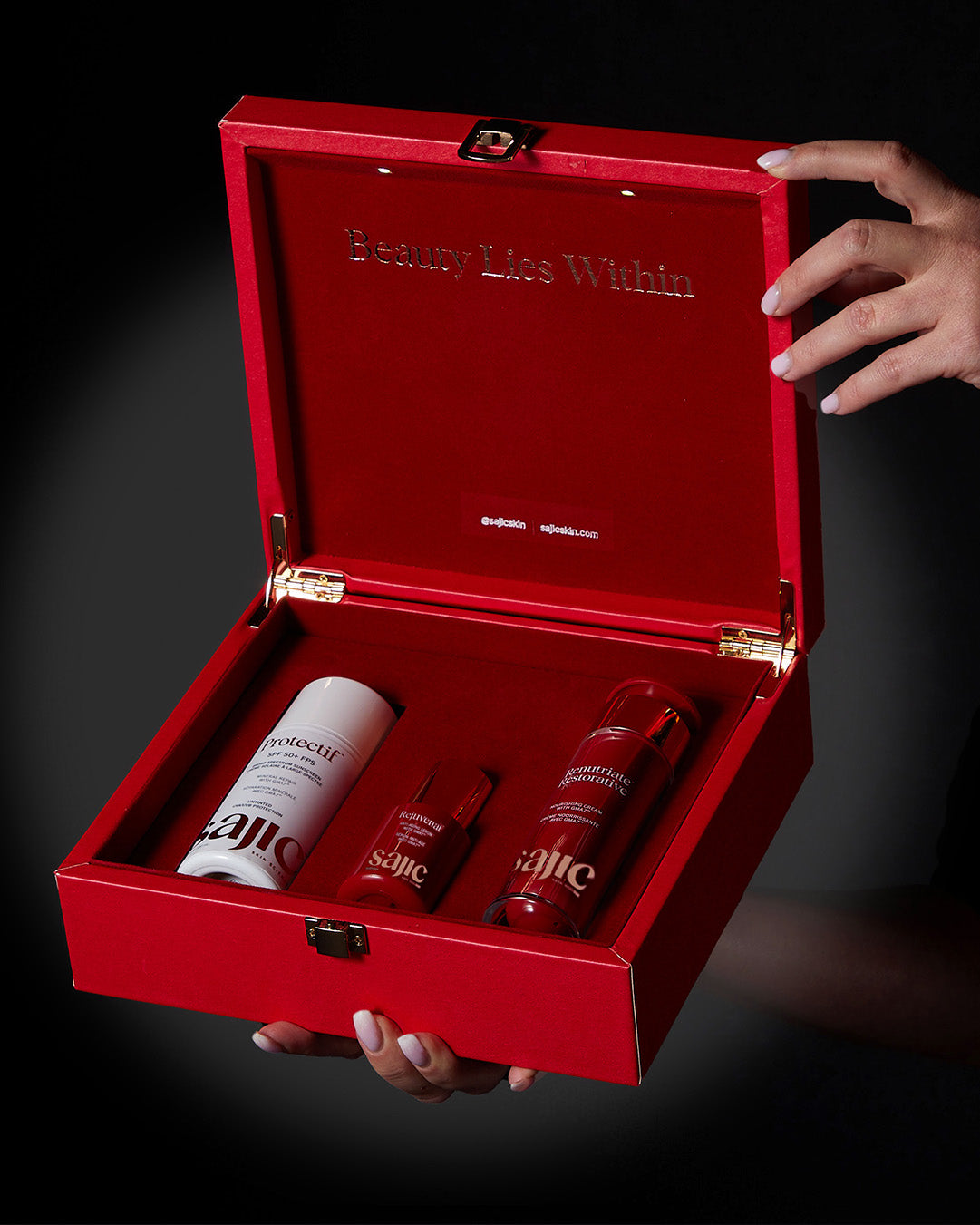
TL;DR: Sunscreen prevents UV damage. Photolyase repairs the UV damage that gets through. Both are required for a serious photoprotection protocol. In the Sajic routine, Rejuvenat carries photolyase inside the patented GMA7 delivery system so the enzyme reaches living keratinocytes, and Protectif provides the mineral SPF 50+ layer over it.
12 hallmarks of aging framework
---
What is photolyase?
Photolyase is a flavoprotein DNA repair enzyme that recognises cyclobutane pyrimidine dimers (CPDs) on damaged DNA strands and reverses them using energy harvested from blue and near-UV light (Sancar, 2003, Chemical Reviews). The enzyme is found in bacteria, plants, and most non-placental animals. Humans lost functional photolyase during mammalian evolution.
Where does cosmetic photolyase come from?
The photolyase used in dermatologic formulations is most commonly extracted from Anabaena species, a cyanobacterium with a robust photolyase that tolerates topical formulation conditions (Stege et al., 2000, PNAS). The enzyme is encapsulated in liposomes or other lipid carriers to survive shelf life and reach viable epidermal cells.
Why don't humans make photolyase natively?
Placental mammals lost the photolyase gene during evolution and now rely on slower, more error-prone repair pathways like nucleotide excision repair (Lucas-Lledo and Lynch, 2009, Molecular Biology and Evolution). In my dermatology practice, this evolutionary gap is exactly the case I make to patients who think sunscreen alone is sufficient. Our repair machinery is slower than UV exposure, especially during peak summer months.
What did Aziz Sancar prove?
Aziz Sancar shared the 2015 Nobel Prize in Chemistry for mechanistic studies of DNA repair, including the photolyase reaction cycle (Nobel Foundation, 2015). His foundational work established how the enzyme uses blue-light photons to break the abnormal covalent bonds inside a CPD, restoring the DNA strand to its original sequence (Sancar, 2003).
Citation capsule: Photolyase is a blue-light-activated DNA repair enzyme that reverses cyclobutane pyrimidine dimers, the primary mutagenic lesions UV creates in skin DNA (Sancar, 2003, Chemical Reviews). The 2015 Nobel Prize in Chemistry recognised this mechanism. Cosmetic photolyase is sourced from Anabaena cyanobacteria and stabilised inside lipid carriers (Stege et al., 2000).
How GMA7 delivers photolyase to living skin
---
What does photolyase do for skin?
Photolyase repairs cyclobutane pyrimidine dimers, the dominant UV-induced DNA lesion in human keratinocytes. CPDs account for roughly 75% of UV-induced DNA damage and are the primary driver of UV-related mutagenesis and skin cancer (Mouret et al., 2006, PNAS). Topical photolyase plus visible-light exposure can reduce CPD load by approximately 40-45% (Berardesca et al., 2012).
Why CPDs matter more than reactive oxygen species
Most antioxidant skincare targets reactive oxygen species (ROS), which are real but secondary contributors to UV damage. CPDs are direct DNA lesions caused by photon absorption, and they cause the signature C-to-T mutations found in basal and squamous cell carcinomas (Brash, 2015, Photochemistry and Photobiology). Antioxidants and photolyase are not interchangeable. They address different damage classes. A serious photoaging protocol requires both, not a choice between them.
How does photolyase tie into the hallmarks of aging?
Genomic instability is the first hallmark of aging in the Lopez-Otin framework (Lopez-Otin et al., 2023, Cell). Unrepaired CPDs accumulate as somatic mutations, drive cellular senescence, and accelerate the visible signs of photoaging. Photolyase intervenes at this first hallmark directly, which is why it sits inside the 12 Hallmarks of Aging framework as a genomic-instability tool, not a cosmetic moisturiser.
What does the clinical evidence actually show?
In the Berardesca 2012 randomized clinical evaluation, topical photolyase applied to UV-irradiated human skin reduced CPD-positive cells by roughly 40-45% versus vehicle control, and reduced markers of UV-induced apoptosis (Berardesca et al., 2012, Photodermatology, Photoimmunology and Photomedicine, PMID 22458404). The original Stege 2000 PNAS trial showed photolyase plus visible light reduced CPDs by approximately 40-45% in human skin within 30 minutes of irradiation (Stege et al., 2000, PMID 10670459).
Citation capsule: Photolyase reverses cyclobutane pyrimidine dimers (CPDs), the dominant UV-induced DNA lesion in human keratinocytes (Mouret et al., 2006, PNAS). Topical application reduced CPD-positive cells by approximately 40-45% and reduced UV-induced apoptosis (Berardesca et al., 2012, PMID 22458404). This intervenes at the genomic instability hallmark of aging (Lopez-Otin et al., 2023, Cell).
Cellular senescence and skin aging
---

Photolyase vs sunscreen, what is the difference?
Sunscreen prevents UV photons from reaching DNA. Photolyase repairs the damage from photons that get through anyway. SPF 30 blocks roughly 97% of UVB and SPF 50 blocks roughly 98% (FDA, 2019), which means 2-3% of incident UVB still reaches the skin even with perfect application.
Why isn't sunscreen alone enough?
Three realities create a residual damage problem that prevention cannot solve. First, real-world sunscreen application is typically half the laboratory dose, dropping effective SPF substantially (Petersen and Wulf, 2014, Photodermatology, Photoimmunology and Photomedicine). Second, indoor and through-window UVA exposure is significant and rarely addressed by daily routines. Third, no sunscreen blocks 100% of UV, so cumulative daily exposure builds CPDs across a lifetime.
How do prevention and repair fit together?
Prevention and repair are sequential layers, not alternatives. In 22 years of clinical practice, the patients with the cleanest photoaging trajectories are the ones running both: a daily mineral sunscreen plus a repair-anchored evening or post-exposure step. The math is straightforward. If sunscreen blocks 97% of UVB, photolyase addresses the remaining 3% that still creates CPDs.
Why combine photolyase with zinc oxide specifically?
Zinc oxide provides broad-spectrum UVA and UVB protection, including the long-UVA wavelengths poorly covered by some chemical filters (Mitchnick et al., 1999, Journal of the American Academy of Dermatology). Combining a zinc oxide sunscreen with a photolyase product covers both prevention and repair in one morning routine. In the Sajic line, photolyase is carried inside the GMA7 microcarrier in Rejuvenat so the enzyme reaches viable keratinocytes rather than sitting on the stratum corneum, and Protectif supplies the zinc oxide and titanium dioxide filters on top.
Citation capsule: SPF 30 and SPF 50 sunscreens block approximately 97-98% of UVB, leaving residual UV-induced DNA damage (FDA, 2019). Real-world application is typically half the laboratory dose (Petersen and Wulf, 2014). Photolyase combined with broad-spectrum zinc oxide addresses both prevention and repair in one application (Berardesca et al., 2012).
---
What is the clinical evidence for topical photolyase?
The clinical evidence base is smaller than retinoid or vitamin C literature but mechanistically rigorous. Three studies anchor the field. Stege 2000 in PNAS established proof of concept in human skin (Stege et al., 2000). Berardesca 2012 confirmed efficacy in a controlled clinical setting (Berardesca et al., 2012). Subsequent trials extended the application to actinic keratosis and post-procedure recovery.
What did the Stege 2000 PNAS trial demonstrate?
Stege and colleagues applied photolyase plus visible light to UV-B-irradiated human skin and measured CPDs by immunoassay. The treated sites showed approximately 40-45% reduction in CPDs versus untreated control sites within 30 minutes (Stege et al., 2000, PNAS, PMID 10670459). The trial also documented reduced erythema and reduced UV-induced immunosuppression in treated sites.
What did Berardesca 2012 add?
Berardesca's 2012 trial extended findings into a longer application protocol with formulated topical photolyase and confirmed reduction in CPD-positive cells and reduction in apoptosis markers in irradiated skin (Berardesca et al., 2012, PMID 22458404). The study used a commercial photolyase formulation rather than a research preparation, which moved the evidence base toward formulations clinicians can prescribe.
Where does photolyase fit in actinic keratosis prevention?
Subsequent trials have applied topical photolyase to actinic keratosis prevention in immunosuppressed organ-transplant recipients, showing reduced lesion counts compared with sunscreen alone (Puviani et al., 2013, European Journal of Dermatology). The mechanism is consistent. Reducing CPD load reduces the somatic mutation burden that drives keratinocyte transformation.
What about post-procedure recovery?
Photolyase has been studied as an adjunct after laser resurfacing, chemical peels, and microneedling, with reports of accelerated healing and reduced post-inflammatory hyperpigmentation in pilot studies (Emanuele et al., 2014, Journal of Drugs in Dermatology). In my own practice over the past decade, post-laser patients on a photolyase-containing protocol consistently report less downtime than historical controls, though I would not present this as a substitute for a controlled trial.
Citation capsule: Topical photolyase has been validated in three rigorous human studies. Stege 2000 in PNAS established proof of concept with approximately 40-45% CPD reduction (Stege et al., 2000, PMID 10670459). Berardesca 2012 confirmed efficacy in formulated product (Berardesca et al., 2012, PMID 22458404). Puviani 2013 extended applications into actinic keratosis prevention (Puviani et al., 2013).
Founder profile and clinical credentials
---
How do you actually use photolyase in a routine?
Photolyase needs visible light activation, which means it works during daylight exposure rather than overnight. The practical protocol is AM application of the photolyase product (Rejuvenat in the Sajic routine) underneath sunscreen. Reapply the sunscreen during outdoor exposure as you normally would.
What is the Sajic photolyase protocol?
In the Sajic routine, photolyase comes from Rejuvenat, applied in the morning on cleansed skin, followed by Protectif (Untinted, Fair Tint or Deep Tint), a 100% mineral SPF 50+ with zinc oxide and titanium dioxide. Reapply Protectif at least every two hours during continuous outdoor exposure.
How do you pair photolyase with antioxidants?
Antioxidants and photolyase address complementary damage classes. In the Sajic routine, Rejuvenat supplies both the photolyase and antioxidants (hydroxytyrosol, olive leaf and grape seed extracts) underneath Protectif's mineral filters. The antioxidants neutralise ROS generated by UV exposure, and photolyase repairs the residual CPD damage that gets through sunscreen filters.
What about layering with retinoids or bakuchiol?
Retinoid-class actives, including bakuchiol, are evening-protocol ingredients (Dhaliwal et al., 2019, British Journal of Dermatology). Photolyase is morning. The two layer naturally across a 24-hour cycle without competing.
---
Frequently asked questions
What is the difference between photolyase and antioxidants?
Photolyase repairs DNA damage. Antioxidants neutralise reactive oxygen species before they cause downstream damage. CPDs (the lesions photolyase fixes) account for roughly 75% of UV-induced DNA damage (Mouret et al., 2006, PNAS). Antioxidants address the ROS pathway. A complete photoprotection protocol uses both, not one or the other.
Can photolyase reverse sun damage?
Yes, partially. Topical photolyase plus visible light reduced CPD-positive keratinocytes by approximately 40-45% in human skin (Berardesca et al., 2012, PMID 22458404). It cannot undo macroscopic photoaging like solar elastosis, but it does reverse the molecular DNA lesions that drive cumulative photoaging and skin cancer risk.
Do you need photolyase if you use sunscreen?
Yes, in a complete protocol. SPF 30-50 blocks 93-98% of UVB (FDA, 2019) but real-world application typically halves that protection (Petersen and Wulf, 2014). Photolyase addresses the residual CPD damage. Prevention plus repair is the rigorous approach.
Is topical photolyase clinically proven to work?
Yes. Three peer-reviewed human studies anchor the evidence base: Stege 2000 in PNAS, Berardesca 2012, and Puviani 2013 for actinic keratosis prevention. The base is smaller than retinoid literature but mechanistically grounded in Aziz Sancar's Nobel-Prize-winning DNA repair work (Sancar, 2003, Chemical Reviews).
What is the source of photolyase in cosmetic products?
Cosmetic photolyase is most commonly extracted from Anabaena nostoc, a cyanobacterium with a robust photolyase enzyme that survives topical formulation (Stege et al., 2000). The enzyme is encapsulated in lipid carriers like the GMA7 microcarriers in Sajic Rejuvenat so it reaches viable keratinocytes.
Can photolyase prevent skin cancer?
Topical photolyase has reduced precursor lesion (actinic keratosis) counts in immunosuppressed transplant patients (Puviani et al., 2013, European Journal of Dermatology). Mechanistically, reducing CPD load reduces the mutational burden that drives squamous and basal cell carcinoma (Brash, 2015). Direct prevention trials in healthy populations are still needed.
Full FAQ on cosmeceutical science
---
About the author
Dr. Dusan Sajic, MD, FRCPC, FAAD is a board-certified dermatologist with 22+ years of clinical practice, Past President of CLASS (Canadian Laser and Aesthetic Specialists Society), TEDx speaker, and inventor of GMA7 (Genoplex Microdelivery Activator). He founded Sajic Skin Science in 2007 and continues to lead product development from his clinic in Ontario, Canada. Read the full founder profile.
Last reviewed: 2026-06-02 by Dr. Dusan Sajic, MD, FRCPC, FAAD.
---
References
- Sancar A. Structure and function of DNA photolyase and cryptochrome blue-light photoreceptors. Chemical Reviews. 2003;103(6):2203-37. PMID 12683797. https://pubmed.ncbi.nlm.nih.gov/12683797/
- Stege H, Roza L, Vink AA, et al. Enzyme plus light therapy to repair DNA damage in ultraviolet-B-irradiated human skin. PNAS. 2000;97(4):1790-5. PMID 10670459. https://pubmed.ncbi.nlm.nih.gov/10670459/
- Berardesca E, Bertona M, Altabas K, Altabas V, Emanuele E. Reduced ultraviolet-induced DNA damage and apoptosis in human skin with topical application of a photolyase-containing DNA repair enzyme cream. Photodermatology, Photoimmunology and Photomedicine. 2012;28(6):318-25. PMID 22458404. https://pubmed.ncbi.nlm.nih.gov/22458404/
- Sajic D, et al. Clinical Evaluation of a Nature-Based Bakuchiol Anti-Aging Moisturizer for Sensitive Skin. Journal of Cosmetic Dermatology. 2021. PMID 33740839. DOI 10.1111/jocd.14084. https://pubmed.ncbi.nlm.nih.gov/33740839/
- Lopez-Otin C, Blasco MA, Partridge L, Serrano M, Kroemer G. Hallmarks of aging: An expanding universe. Cell. 2023;186(2):243-278. DOI 10.1016/j.cell.2022.11.001. https://doi.org/10.1016/j.cell.2022.11.001
- Mouret S, Baudouin C, Charveron M, Favier A, Cadet J, Douki T. Cyclobutane pyrimidine dimers are predominant DNA lesions in whole human skin exposed to UVA radiation. PNAS. 2006;103(37):13765-70. PMID 16982734. https://pubmed.ncbi.nlm.nih.gov/16982734/
- Brash DE. UV signature mutations. Photochemistry and Photobiology. 2015;91(1):15-26. PMID 25683379. https://pubmed.ncbi.nlm.nih.gov/25683379/
- Lucas-Lledo JI, Lynch M. Evolution of mutation rates: phylogenomic analysis of the photolyase/cryptochrome family. Molecular Biology and Evolution. 2009;26(5):1143-53. PMID 19414525. https://pubmed.ncbi.nlm.nih.gov/19414525/
- Petersen B, Wulf HC. Application of sunscreen, theory and reality. Photodermatology, Photoimmunology and Photomedicine. 2014;30(2-3):96-101. PMID 24697914. https://pubmed.ncbi.nlm.nih.gov/24697914/
- Puviani M, Barcella A, Milani M. Efficacy of a photolyase-based device in the treatment of cancerization field in patients with actinic keratosis. European Journal of Dermatology. 2013. PMID 24138520. https://pubmed.ncbi.nlm.nih.gov/24138520/
- Dhaliwal S, Rybak I, Ellis SR, et al. Prospective, randomized, double-blind assessment of topical bakuchiol and retinol for facial photoaging. British Journal of Dermatology. 2019;180(2):289-296. PMID 29947134. https://pubmed.ncbi.nlm.nih.gov/29947134/


