



Melasma treatment in 2026: what actually works
Melasma is a chronic disorder of pigmentation — symmetrical brown or grey-brown patches, usually on the cheeks, forehead, upper lip, and bridge of the nose. It is driven by a combination of genetics, hormones (pregnancy, oral contraceptives, hormone therapy), and — critically — light exposure across both UV and visible spectrums (Kwon et al., 2019, International Journal of Molecular Sciences). The single biggest 2026 shift in melasma care is the recognition that visible light, not just UV, is a major driver — which changes the entire prevention strategy.
The honest reality: melasma is manageable, not curable. There is no single treatment that works alone, and hydroquinone — long considered the gold standard — is now understood as one tool among several, not the whole answer. The most effective 2026 protocols layer rigorous visible-light photoprotection, tyrosinase-inhibiting topicals beyond hydroquinone, oral tranexamic acid in appropriate patients, and conservative energy-based devices — all under dermatologist supervision (Rodrigues and Pandya, 2015, Dermatologic Clinics).
Why melasma is so hard to treat
It's not just surface pigment
Melasma involves overactive melanocytes that deposit excess pigment in both the epidermis and, in many patients, the deeper dermis (Kwon et al., 2019). Epidermal pigment responds reasonably to topicals; dermal pigment is far more stubborn. Beyond melanocytes, melasma involves an abnormal vascular component (increased blood vessels), a disrupted skin barrier, and even changes in the basement membrane — meaning it's a multi-system disorder, not a simple stain (Espósito et al., 2018, American Journal of Pathology). This is precisely why single-agent treatments fail.
The visible light revelation
For years, melasma prevention meant "wear SPF." But standard chemical sunscreens block UV while letting visible light through — and research now shows visible light, particularly high-energy blue light, independently stimulates melanogenesis in melasma-prone (Fitzpatrick III–VI) skin (Passeron and Picardo, 2018, Pigment Cell & Melanoma Research). This means patients diligently wearing UV-only sunscreen were still driving their melasma with everyday visible light from the sun, screens, and indoor lighting. The solution: tinted mineral sunscreens containing iron oxides, which block visible light in a way clear sunscreens cannot.

The foundation: visible-light photoprotection
Why iron oxides matter
Iron oxides are mineral pigments that absorb visible light — the wavelengths that pass straight through clear sunscreens. Studies show tinted sunscreens with iron oxides significantly outperform non-tinted mineral or chemical sunscreens for melasma control, precisely because they block the visible light that non-tinted formulas miss (Boukari et al., 2015, Journal of the American Academy of Dermatology). In melasma, photoprotection isn't one component of treatment — it's the foundation that determines whether every other intervention succeeds or fails.
What proper melasma photoprotection looks like
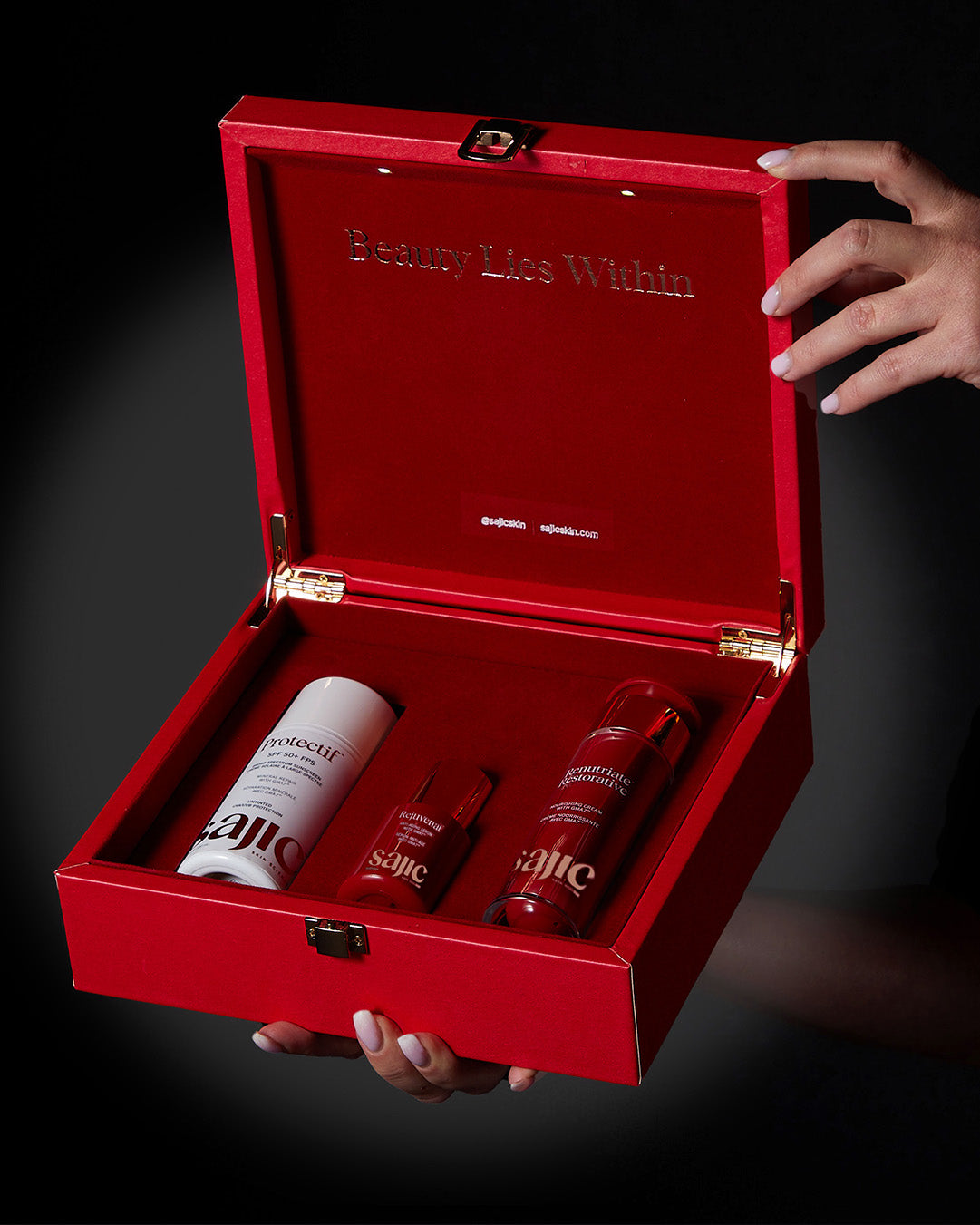
The 2026 standard: a mineral SPF 50+ containing iron oxides (for visible light), applied every morning and reapplied every 2 hours with sun exposure, combined with physical measures — wide-brimmed hats, shade seeking, and awareness of indirect light. Protectif® mineral SPF 50+ is built on zinc oxide and titanium dioxide plus iron oxide, giving it broad-spectrum UV coverage and the visible-light protection melasma demands. Its GMA7® and photolyase components add DNA repair, but for melasma specifically, the iron-oxide visible-light block is the critical feature. If you are choosing one now, browse our sunscreens for melasma.
Topical treatments beyond hydroquinone
Hydroquinone — still useful, no longer solo
Hydroquinone remains the most-studied topical melasma treatment, working by inhibiting tyrosinase (the rate-limiting enzyme in melanin production). The classic "Kligman formula" — hydroquinone + tretinoin + a mild corticosteroid — still produces strong results (Rodrigues and Pandya, 2015). But hydroquinone carries risks with long-term use (ochronosis, irritation), so it's now used in structured courses with breaks rather than indefinitely, and increasingly combined with or replaced by gentler agents.
Tranexamic acid, azelaic acid, cysteamine, kojic acid
Topical tranexamic acid reduces melanocyte activity and the vascular component of melasma through a different mechanism than hydroquinone (Kim et al., 2017, Journal of the European Academy of Dermatology and Venereology). Azelaic acid (15–20%) inhibits tyrosinase, is anti-inflammatory, and is safe in pregnancy — a major advantage for pregnancy-related melasma. Cysteamine is a potent non-hydroquinone depigmenting agent with growing evidence (Mansouri et al., 2015, British Journal of Dermatology). Kojic acid, niacinamide, and topical vitamin C round out the toolkit. These are frequently combined for synergy and to allow hydroquinone breaks. A dermatologist can custom-compound these actives into a barrier-supportive base — potent depigmenting agents in a formulation that won't compromise the already-disrupted melasma barrier.
Oral tranexamic acid: the breakthrough
Why it changed the game
Oral tranexamic acid (TXA) — originally an anti-fibrinolytic used to control bleeding — has become one of the most significant advances in melasma care for moderate-to-severe or treatment-resistant cases. At low doses, it reduces melanocyte stimulation and the abnormal vascularity of melasma, producing meaningful lightening where topicals plateau (Del Rosario et al., 2018, Journal of the American Academy of Dermatology). It also improves the outcomes of subsequent procedures.
The safety requirement
Oral TXA is not for everyone. It carries a clotting risk and is contraindicated in patients with a history of thromboembolism, cardiovascular disease, pregnancy, or certain medications (including some hormonal contraceptives). This is exactly why it must be prescribed with proper screening and physician oversight — never self-sourced. When appropriately screened patients use it under supervision, the safety profile is excellent and the results can be transformative.
Devices: proceed with caution
Why aggressive lasers backfire
Melasma is uniquely prone to rebound and worsening after aggressive laser treatment. High-energy devices can trigger post-inflammatory hyperpigmentation that leaves the patient worse than before — one of dermatology's classic cautionary tales (Trivedi et al., 2017, Lasers in Surgery and Medicine). The heat and inflammation from over-aggressive treatment stimulate the very melanocytes you're trying to calm.
The conservative approach that works
When devices are used for melasma, the 2026 standard is low, conservative energy: low-fluence Q-switched or picosecond lasers, gentle non-ablative fractional treatment, and always in combination with strict photoprotection and topical maintenance. Devices are never a first-line solo treatment for melasma — they're an adjunct for stable, well-controlled cases, layered onto a foundation of photoprotection and topicals. Patient selection and restraint are everything.
Frequently asked questions
Can melasma be cured permanently?
No — melasma is a chronic condition with a strong genetic and hormonal basis. It can be substantially lightened and controlled, but maintenance is lifelong. Patients who achieve clearance and then stop photoprotection and maintenance almost always relapse. The realistic goal is long-term control, not permanent cure.
Is my regular sunscreen enough for melasma?
Probably not. Standard clear sunscreens block UV but let visible light through — and visible light independently drives melasma in darker skin types. You need a tinted mineral sunscreen with iron oxides for visible-light protection. This single change is often the difference between melasma that improves and melasma that stalls.
Is melasma treatment safe during pregnancy?
Some treatments are, some aren't. Azelaic acid and mineral sunscreen are considered safe in pregnancy; hydroquinone, retinoids, and oral tranexamic acid are not. Pregnancy-related melasma ("the mask of pregnancy") often improves after delivery, so many dermatologists focus on rigorous photoprotection and pregnancy-safe topicals during pregnancy, then address residual pigment afterward.
How long until I see melasma improvement?
With a proper layered protocol, initial improvement typically appears in 8–12 weeks. Significant lightening takes 3–6 months of consistent treatment. Melasma responds to patience and consistency; it punishes aggressive shortcuts with rebound.
The bottom line
Melasma in 2026 is treatable but never with a single agent. The evidence-based protocol layers iron-oxide mineral photoprotection (the foundation), a rotation of tyrosinase-inhibiting topicals beyond hydroquinone, oral tranexamic acid in screened patients, and conservative devices for stable cases — all coordinated by a dermatologist.
The two anchors most patients get wrong: they use clear sunscreen that lets visible light through, and they chase aggressive lasers that rebound. Get the photoprotection right with Protectif® mineral SPF 50+ with iron oxides, layer evidence-based topicals suited to your skin, and — for stubborn cases — consult a dermatologist about custom-compounded protocols and whether oral tranexamic acid is appropriate for you. For stubborn cases, consult a dermatologist about custom-compounded protocols and whether oral tranexamic acid is appropriate for you, with proper medical screening.
References
- Kwon SH, Na JI, Choi JY, Park KC. Melasma: updates and perspectives. Experimental Dermatology. 2019;28(6):704-708. doi.org/10.1111/exd.13844
- Rodrigues M, Pandya AG. Melasma: clinical diagnosis and management options. Australasian Journal of Dermatology. 2015;56(3):151-163. doi.org/10.1111/ajd.12290
- Passeron T, Picardo M. Melasma, a photoaging disorder. Pigment Cell & Melanoma Research. 2018;31(4):461-465. doi.org/10.1111/pcmr.12684
- Boukari F, Jourdan E, Fontas E, et al. Prevention of melasma relapses with sunscreen combining protection against UV and visible light. Journal of the American Academy of Dermatology. 2015;72(1):189-190. doi.org/10.1016/j.jaad.2014.08.023
- Espósito ACC, Cassiano DP, da Silva CN, et al. Update on melasma-part I: pathogenesis. Dermatology and Therapy. 2022;12(9):1967-1988. doi.org/10.1007/s13555-022-00779-x
- Del Rosario E, Florez-Pollack S, Zapata L Jr, et al. Randomized, placebo-controlled, double-blind study of oral tranexamic acid in the treatment of moderate-to-severe melasma. Journal of the American Academy of Dermatology. 2018;78(2):363-369. doi.org/10.1016/j.jaad.2017.09.053
- Kim SJ, Park JY, Shibata T, et al. Efficacy and possible mechanisms of topical tranexamic acid in melasma. Clinical and Experimental Dermatology. 2016;41(5):480-485. doi.org/10.1111/ced.12835
- Mansouri P, Farshi S, Hashemi Z, Kasraee B. Evaluation of the efficacy of cysteamine 5% cream in the treatment of epidermal melasma. British Journal of Dermatology. 2015;173(1):209-217. doi.org/10.1111/bjd.13424
- Trivedi MK, Yang FC, Cho BK. A review of laser and light therapy in melasma. International Journal of Women's Dermatology. 2017;3(1):11-20. doi.org/10.1016/j.ijwd.2017.01.004
- Sarkar R, Arsiwala S, Dubey N, et al. Chemical peels in melasma: a review with consensus recommendations by Indian pigmentary expert group. Indian Journal of Dermatology. 2017;62(6):578-584. doi.org/10.4103/ijd.IJD_490_17
- Grimes PE, Ijaz S, Nashawati R, Kwak D. New oral and topical approaches for the treatment of melasma. International Journal of Women's Dermatology. 2019;5(1):30-36. doi.org/10.1016/j.ijwd.2018.09.004
- Lima PB, Dias JAF, Cassiano D, et al. A comparative study of topical 5% cysteamine versus 4% hydroquinone in the treatment of facial melasma. International Journal of Dermatology. 2020;59(12):1531-1536. doi.org/10.1111/ijd.15146
This article is for informational purposes only and does not constitute medical advice. Prescription treatments including hydroquinone and oral tranexamic acid require a valid prescription and medical screening. Always consult a qualified dermatologist for individual guidance.
About the author
Dr. Dusan Sajic, MD, PhD, FRCPC, FAAD is a board-certified dermatologist with 22+ years of clinical experience, Past President of CLASS (Canadian Laser and Aesthetic Specialists Society), TEDx speaker, and inventor of GMA7® (Genoplex Microdelivery Activator). He treats melasma daily in his dermatology practice and formulates evidence-based protocols for pigmentation disorders. Meet Dr. Sajic →


