



What does niacinamide actually do?
Niacinamide is a form of vitamin B3, and it is one of the few skincare ingredients that does several unrelated things well rather than one thing brilliantly. The evidence supports four claims: it helps the skin barrier hold moisture, it reduces the transfer of pigment that creates dark spots, it calms redness, and it moderates oil production. Studies using 5 percent niacinamide over eight to twelve weeks have reported improvement in blotchiness, texture and fine lines (Bissett et al., 2005).
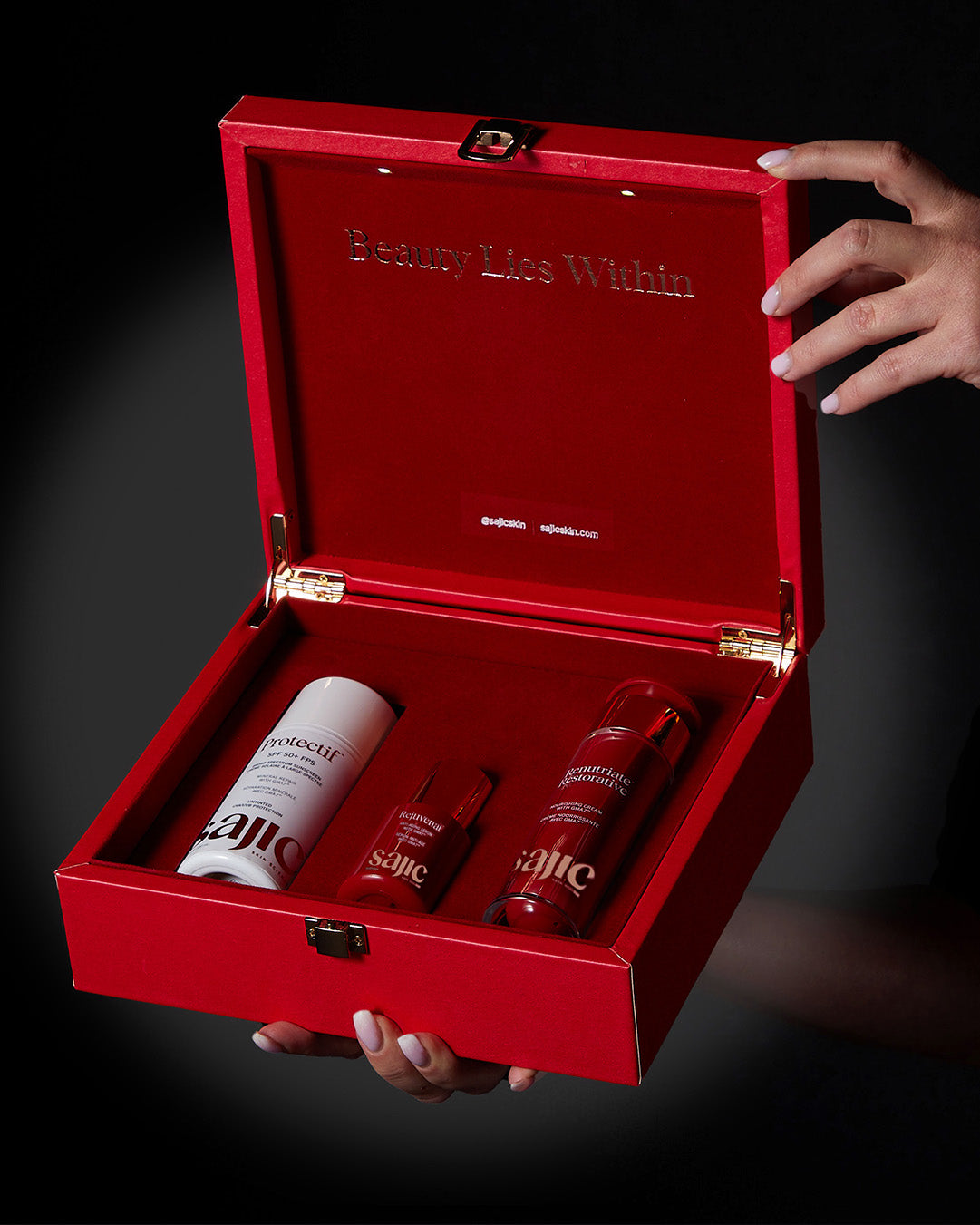
What it is not is a replacement for a retinoid or for sunscreen. Think of niacinamide as the ingredient that makes the rest of a routine tolerable and the barrier resilient, which is exactly why it appears in so many formulations, including Rejuvenat.
How niacinamide works
Once absorbed, niacinamide feeds into two coenzymes your skin cells use for energy and repair. That sounds abstract, but the downstream effects are measurable. It increases the production of ceramides and other lipids in the outermost layer, which is the mortar that holds the barrier together and slows water loss (Tanno et al., 2000). A barrier that holds water is a barrier that looks smoother and tolerates stronger actives.
Its effect on pigment works differently from most brighteners. Vitamin C and hydroquinone interfere with melanin production inside the pigment cell. Niacinamide leaves production alone and instead blocks the handoff, reducing the transfer of melanosomes from pigment cells to surrounding skin cells (Hakozaki et al., 2002). Because the mechanism is different, it stacks usefully with the others rather than competing with them.

What the evidence actually supports
Barrier and moisture
This is the best supported claim. Niacinamide raises ceramide levels in the stratum corneum and reduces water loss through the skin (Tanno et al., 2000). In practice it means less tightness, less flaking, and better tolerance of retinoids, which is often the reason a dermatologist adds it.
Dark spots and uneven tone
In a controlled comparison, 5 percent niacinamide reduced hyperpigmentation and increased skin lightness over eight weeks (Hakozaki et al., 2002). The effect is real and moderate. It will not clear melasma on its own, and stubborn pigment usually needs a layered plan, which we cover in the melasma treatment guide. Pairing it with a well-formulated vitamin C serum is reasonable, since the two work on different steps of the same process.
Redness and reactive skin
A niacinamide-containing moisturizer improved barrier function and was well tolerated in people with rosacea-prone skin (Draelos et al., 2005). For anyone whose main complaint is a face that flushes and stings, this is often the more useful starting point than another exfoliant.
Oil and the appearance of pores
Niacinamide moderates sebum output, and less oil sitting in a pore makes the pore look smaller. It does not change pore size, since that is largely structural and genetic. Anything promising to shrink pores permanently is overselling.
Fine lines
Bissett and colleagues reported improvement in fine lines and wrinkles at 5 percent over twelve weeks (Bissett et al., 2005). The magnitude is modest next to a retinoid. Use niacinamide as support, not as your primary anti-aging active. If you want the ingredient that does the structural work, see our comparison of retinol, retinaldehyde and retinoic acid.
What concentration do you need?
Five percent. Nearly all of the published clinical work sits at or near that level, and it is where the benefit and the tolerability meet. Products advertising 10 or 20 percent are not proportionally better, and higher concentrations are the most common reason people report stinging, flushing or small bumps after starting niacinamide. If a 10 percent product has irritated you in the past, the ingredient is probably not the problem. The dose is.
Can you use niacinamide with vitamin C?
Yes. This is the most persistent myth in consumer skincare, and it is worth understanding where it came from. Older laboratory work showed that niacinamide can convert to nicotinic acid, a related compound that causes flushing, under conditions of high heat and extreme pH. Those are not the conditions on your face, and modern stabilized formulations are made with this chemistry in mind. Dermatologists routinely use the two together, and some products include both.
If you are layering separate products, let each absorb for a minute before the next. If you have very reactive skin and want to be cautious, use vitamin C in the morning and niacinamide at night. That is a comfort preference, not a chemistry requirement.
The same applies to retinoids. Niacinamide alongside a retinoid tends to improve tolerance rather than reduce the retinoid's effect, which is one reason Rejuvenat carries both in a single formulation instead of asking you to layer them.
Who should be careful
Niacinamide is among the best tolerated actives in dermatology, and it is generally considered safe in pregnancy, unlike retinoids. The main cautions are practical. Start at 5 percent rather than a high-strength product. Introduce it on its own for a week or two if your skin reacts easily, so you know what caused what. And if you get true flushing, stop and speak to a dermatologist, since that points to nicotinic acid contamination in a poorly made product rather than a normal response.
One point of confusion worth clearing up: oral nicotinamide has been studied for reducing new skin cancers in high-risk patients (Chen et al., 2015). That is a separate use, a separate dose, and a decision for a physician. It says nothing about what a serum on your face will do.
Where niacinamide goes in your routine
The general principle for layering is thinnest to thickest, and water-based before oil-based. A niacinamide serum goes on after cleansing and any toner, and before heavier creams and sunscreen. If you use a vitamin C serum in the same routine, apply it first and give it a minute, then the niacinamide.
At night, the common pattern is a retinoid followed by a moisturizer, with niacinamide either in the serum step before the retinoid or built into the moisturizer that follows it. Both work. If your skin is reacting to the retinoid, applying a niacinamide-containing moisturizer afterward tends to make the retinoid easier to keep using, which matters because retinoids only pay off with consistency.
The simplest version is to choose a formulation that already combines them, which removes the layering question entirely and shortens the routine. Rejuvenat takes that approach with niacinamide and retinaldehyde in one step.
Frequently asked questions
How long does niacinamide take to work?
Barrier and redness improvements often show within two to four weeks. Pigment changes take longer, generally eight to twelve weeks of consistent daily use, which matches the length of the published trials. If you have seen nothing by twelve weeks, the concentration or the rest of the routine is more likely the issue than the ingredient.
Should I use niacinamide in the morning or at night?
Either works, and it is stable enough that light and air are not a concern the way they are with some forms of vitamin C. Many people prefer it in the morning under sunscreen for the barrier support, or at night alongside a retinoid to improve tolerance. Consistency matters more than timing.
Can niacinamide cause purging?
It should not. Niacinamide does not accelerate cell turnover the way a retinoid or an acid does, so there is no mechanism for a purge. Breakouts after starting a niacinamide product usually trace back to another ingredient in the formulation, or to too high a concentration.
Is niacinamide safe during pregnancy?
It is generally considered safe in pregnancy, which makes it a common substitute when retinoids are stopped. Confirm with your own physician, since they know your full history and any other products you are using.
The bottom line
Niacinamide earns its place in a routine by making everything else work better. It strengthens the barrier, fades pigment through a mechanism nothing else uses, calms redness and moderates oil, all at a concentration of about 5 percent and with very little irritation.
Use it as support rather than as your headline active. Pair it with a retinoid for structural change and daily sunscreen for protection. And ignore the advice to keep it away from vitamin C, which comes from a lab condition that has nothing to do with your face.
References
- Bissett DL, Oblong JE, Berge CA. Niacinamide: a B vitamin that improves aging facial skin appearance. Dermatologic Surgery. 2005;31(7 Pt 2):860-865. doi.org/10.1111/j.1524-4725.2005.31732
- Hakozaki T, Minwalla L, Zhuang J, et al. The effect of niacinamide on reducing cutaneous pigmentation and suppression of melanosome transfer. British Journal of Dermatology. 2002;147(1):20-31. doi.org/10.1046/j.1365-2133.2002.04834.x
- Tanno O, Ota Y, Kitamura N, Katsube T, Inoue S. Nicotinamide increases biosynthesis of ceramides as well as other stratum corneum lipids to improve the epidermal permeability barrier. British Journal of Dermatology. 2000;143(3):524-531. doi.org/10.1111/j.1365-2133.2000.03705.x
- Draelos ZD, Ertel K, Berge C. Niacinamide-containing facial moisturizer improves skin barrier and benefits subjects with rosacea. Cutis. 2005;76(2):135-141.
- Chen AC, Martin AJ, Choy B, et al. A phase 3 randomized trial of nicotinamide for skin-cancer chemoprevention. New England Journal of Medicine. 2015;373(17):1618-1626. doi.org/10.1056/NEJMoa1506197
This article is for informational purposes only and does not constitute medical advice. Always consult a qualified dermatologist or physician for guidance on your own skin.
About the author
Dr. Dusan Sajic, MD, PhD, FRCPC, FAAD is a board-certified dermatologist with 22+ years of clinical experience, Past President of CLASS (Canadian Laser and Aesthetic Specialists Society), TEDx speaker, and inventor of GMA7 (Genoplex Microdelivery Activator). He founded Sajic Skin Science in 2007 and writes on dermatology, longevity, and evidence-based skincare. Meet Dr. Sajic


