



Post-procedure recovery: the 30-day protocol
The results of any skin procedure — microneedling, laser resurfacing, chemical peels, RF microneedling, biostimulator injections — are determined as much by what you do afterward as by the procedure itself. A perfectly executed CO₂ laser or microneedling session can be undermined by poor aftercare, and a modest procedure can be maximised by an optimised recovery protocol (Alster and Li, 2020, Dermatologic Surgery). Recovery is not passive waiting — it's an active window where the right support accelerates healing, reduces complications, and amplifies your clinical outcome.
The core principle Dr. Sajic teaches his patients: "the procedure is the injury; healing determines the outcome." A structured 30-day protocol has three phases — acute healing (days 0–5), active repair (days 6–14), and optimisation (days 15–30) — each with distinct skincare needs. Get all three right and you protect your investment; get any wrong and you risk prolonged redness, post-inflammatory hyperpigmentation, infection, or blunted results.
Before you begin: the 7-day pre-treatment window
What to stop and why
Optimising recovery starts before the procedure. For 7 days before ablative or intensive treatments, discontinue: retinoids/retinol (increase irritation and delay epithelial repair), L-ascorbic acid vitamin C (can amplify inflammation), AHAs and BHAs (compromise the barrier you'll need intact), benzoyl peroxide (irritating and bleaching), and chemical sunscreens (switch to mineral) (Sajic clinical protocol, consistent with Metelitsa and Alster, 2010, Dermatologic Surgery). Skin that's calm and barrier-intact going into a procedure heals faster and cleaner.
Pre-procedure conditioning
For pigment-prone patients (Fitzpatrick III–VI), a dermatologist may recommend pre-conditioning with a mineral SPF regimen and, in select cases, oral tranexamic acid or a topical to reduce post-inflammatory hyperpigmentation risk. Dr. Sajic also recommends starting Protectif® mineral SPF 50+ 30 days before any planned laser, peel, or microneedling — patients with well-photoprotected, less-reactive skin consistently have shorter downtime and better outcomes.
Phase 1 — Acute healing (Days 0–5)
The gentle, occlusive approach
In the first days after an ablative or intensive procedure, the skin barrier is compromised or absent. The priorities are gentle cleansing, occlusion to prevent transepidermal water loss, and protection from infection (Alster and Li, 2020). This means: bland non-foaming cleanser with lukewarm water, petrolatum or a healing ointment for occlusion, and absolutely no actives. The skin is essentially an open wound and should be treated like one — kept clean, moist, and undisturbed.
Where cellular support begins
Even in the acute phase, peptide-based cellular support can begin once your provider clears it. Rejuvenat® contains copper peptides and photolyase that support DNA repair pathways, modulate inflammation, and stimulate the collagen remodelling that a procedure is designed to trigger — acting as a bio-stimulatory recovery amplifier during the critical early healing window. Introduce it only when your provider confirms the skin can tolerate it, typically as re-epithelialisation begins.

Phase 2 — Active repair (Days 6–14)
Rebuilding the barrier
Once the skin has re-epithelialised — the raw surface has closed over with new epidermis — the focus shifts to barrier reconstruction and hydration. This is where a lamellar ceramide cream becomes central. Renutriate® is a barrier-supportive formulation designed to rebuild the lipid matrix, reduce sensitivity, and create the stable conditions repair pathways need to function optimally (consistent with Draelos, 2018, Dermatologic Clinics). The freshly healed skin is functional but fragile; supporting the barrier now prevents the delayed complications — prolonged redness, sensitivity, breakouts — that derail results.
Continuing peptide-driven repair
Through the active repair phase, continue Rejuvenat® for its peptide and photolyase-driven collagen remodelling. This is the phase where the procedure's stimulated collagen synthesis is actively occurring — supporting it with the right actives measurably improves the final result. Still no aggressive actives (retinoids, acids, high-strength vitamin C) until your provider clears them, typically at the 2–4 week mark depending on procedure depth.
Phase 3 — Optimisation (Days 15–30)
Reintroducing actives strategically
By weeks 3–4, most patients can begin reintroducing actives — but strategically and one at a time. Retinoids typically return first (they support the ongoing collagen remodelling), followed by vitamin C and gentle exfoliating acids as tolerance rebuilds. The reintroduction should be gradual: one active, low frequency, building up. Rushing back to a full active-heavy routine risks re-inflaming skin that's still finishing its repair (Metelitsa and Alster, 2010).
Locking in the result
The optimisation phase is where you consolidate the procedure's gains: continued barrier support, peptide-driven collagen maintenance, and — the single most important long-term factor — rigorous mineral photoprotection. Freshly resurfaced skin is highly susceptible to UV-induced hyperpigmentation for months. Protectif® mineral SPF 50+ with iron oxides and photolyase blocks both UV and visible light while its photolyase enzyme repairs UV-induced DNA damage — exactly the protection newly treated skin needs.
The role of peptide therapy in recovery
Systemic support for tissue repair
Beyond topicals, systemic tissue-repair peptides are increasingly used to support recovery from aesthetic procedures. Compounds like BPC-157 and TB-500 are studied for their roles in tissue repair, angiogenesis, and inflammation modulation (Chang et al., 2011, Journal of Applied Physiology; Sikiric et al., 2018, Current Pharmaceutical Design). Used under physician supervision as part of an inside-out recovery approach, they complement topical support by working at the systemic level. These are research-phase compounds requiring proper medical oversight — never self-sourced.
The coordinated approach
Sajic Longevity Clinic can integrate physician-supervised peptide therapy with the topical post-procedure protocol — an inside-out recovery strategy that supports tissue repair systemically while Rejuvenat, Renutriate, and Protectif work topically. For patients undergoing significant resurfacing procedures, this coordinated approach reflects the same philosophy that runs through all of Sajic's work: treat aging and repair at the cellular level, from every direction simultaneously.
Frequently asked questions
When can I wear makeup after a procedure?
It depends on the procedure depth. After superficial treatments (light microneedling, gentle peels), usually 24–48 hours. After ablative laser resurfacing, not until re-epithelialisation is complete — typically 5–10 days. Applying makeup to non-healed skin risks infection and irritation. Always follow your provider's specific timeline.
Why can't I use my vitamin C serum right after?
L-ascorbic acid is acidic and can sting, irritate, and amplify inflammation on compromised skin. It's beneficial for photoprotection and collagen long-term, but during acute and active repair phases it does more harm than good. Reintroduce it in the optimisation phase (weeks 3–4) once the barrier has rebuilt.
How soon do I need sunscreen after a procedure?
The moment your skin is re-epithelialised — and then every single day, rigorously, for months. Freshly resurfaced skin has minimal defence against UV and is extremely prone to hyperpigmentation. Use a mineral SPF (not chemical, which can irritate healing skin), and reapply. This is the single most important thing you can do to protect your result.
Is it normal to break out after microneedling or laser?
Mild breakouts can occur as accelerated cell turnover surfaces existing congestion, or from occlusive healing ointments. Usually temporary. Persistent or worsening breakouts, or any signs of infection (increasing redness, warmth, pus, fever), warrant immediate contact with your provider.
The bottom line
Post-procedure recovery is an active, structured process — not passive waiting. The 30-day protocol moves through acute healing (gentle, occlusive, protected), active repair (barrier reconstruction with ceramides), and optimisation (strategic active reintroduction plus rigorous photoprotection). Skip the pre-treatment active washout or rush back to a heavy routine, and you risk the very complications — prolonged redness, hyperpigmentation, blunted results — that careful aftercare prevents.
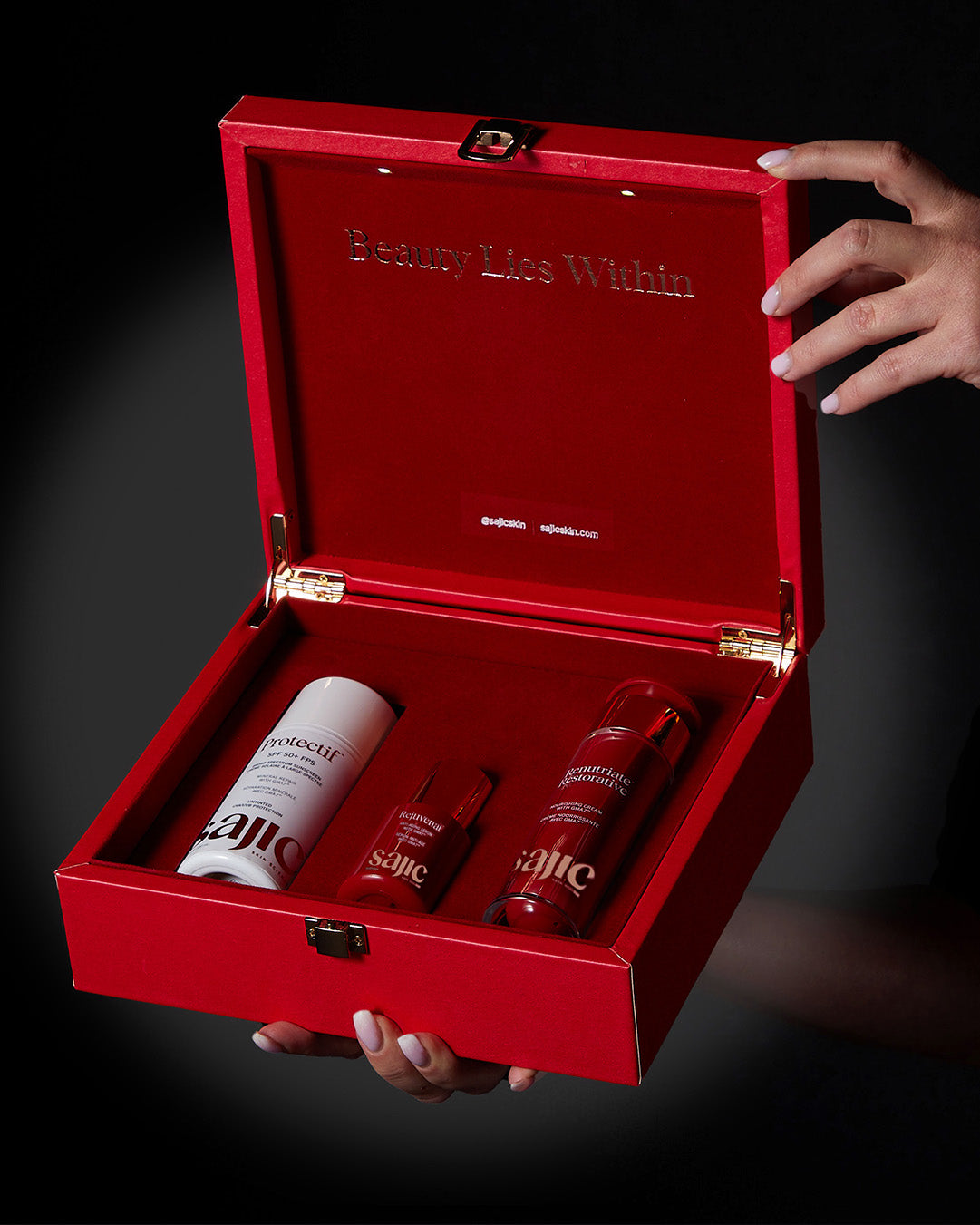
Dr. Sajic's standard post-procedure protocol is the GMA7® trio: Rejuvenat® for cellular repair and collagen remodelling, Renutriate® for barrier reconstruction, and Protectif® for mineral UV and visible-light protection — the exact system he uses in his own clinic before and after resurfacing procedures. For patients undergoing significant treatments, Sajic Longevity Clinic can add physician-supervised tissue-repair peptides for an inside-out recovery approach. Protect your investment; the recovery matters as much as the procedure.
References
- Alster TS, Li MKY. Microneedling of scars: a large prospective study with long-term follow-up. Plastic and Reconstructive Surgery. 2020;145(2):358-364. doi.org/10.1097/PRS.0000000000006462
- Metelitsa AI, Alster TS. Fractionated laser skin resurfacing treatment complications: a review. Dermatologic Surgery. 2010;36(3):299-306. doi.org/10.1111/j.1524-4725.2009.01434.x
- Draelos ZD. The science behind skin care: moisturizers. Journal of Cosmetic Dermatology. 2018;17(2):138-144. doi.org/10.1111/jocd.12490
- Sikiric P, Rucman R, Turkovic B, et al. Novel cytoprotective mediator, stable gastric pentadecapeptide BPC 157. Current Pharmaceutical Design. 2018;24(18):1990-2001. doi.org/10.2174/1381612824666180608110815
- Chang CH, Tsai WC, Lin MS, Hsu YH, Pang JS. The promoting effect of pentadecapeptide BPC 157 on tendon healing involves tendon outgrowth, cell survival, and cell migration. Journal of Applied Physiology. 2011;110(3):774-780. doi.org/10.1152/japplphysiol.00945.2010
- Fabbrocini G, De Vita V, Monfrecola A, et al. Percutaneous collagen induction: an effective and safe treatment for post-acne scarring. Journal of Dermatological Treatment. 2014;25(2):147-152. doi.org/10.3109/09546634.2012.742949
- Preissig J, Hamilton K, Markus R. Current laser resurfacing technologies: a review that delves beneath the surface. Seminars in Plastic Surgery. 2012;26(3):109-116. doi.org/10.1055/s-0032-1329413
- Wollina U, Goldman A. Fillers and post-procedure care: a review of best practices. Journal of Cutaneous and Aesthetic Surgery. 2020;13(4):267-273. doi.org/10.4103/JCAS.JCAS_60_20
- Sadick NS, Cardona A. Laser treatment for facial acne scars: a review. Journal of Cosmetic and Laser Therapy. 2018;20(7-8):424-435. doi.org/10.1080/14764172.2018.1461230
- Ferguson JE, Andrew SM, August PJ. The importance of sun protection following laser resurfacing. Clinical and Experimental Dermatology. 2016;41(4):428-430. doi.org/10.1111/ced.12820
- Zaleski-Larsen LA, Fabi SG. Laser-assisted drug delivery. Dermatologic Surgery. 2016;42(8):919-931. doi.org/10.1097/DSS.0000000000000556
This article is for informational purposes only and does not constitute medical advice. Post-procedure protocols should always follow your treating provider's specific instructions. Research-phase peptide compounds require physician supervision. Always consult a qualified professional for individual guidance.
About the author
Dr. Dusan Sajic, MD, PhD, FRCPC, FAAD is a board-certified dermatologist with 22+ years of clinical experience, Past President of CLASS (Canadian Laser and Aesthetic Specialists Society), TEDx speaker, and inventor of GMA7® (Genoplex Microdelivery Activator). He performs laser resurfacing and microneedling procedures and uses the Rejuvenat–Renutriate–Protectif protocol as his clinic standard for post-procedure recovery. Meet Dr. Sajic →


