



Bakuchiol is a plant-derived meroterpene from Psoralea corylifolia seeds that produces retinol-like skincare effects through a different mechanistic route. The pivotal head-to-head trial (Dhaliwal et al., 2019, British Journal of Dermatology, PMID 29947134) showed bakuchiol matched retinol on wrinkle and hyperpigmentation reduction at 12 weeks, with significantly less stinging, scaling, and erythema.
TL;DR: Bakuchiol is a plant-derived compound with peer-reviewed evidence of retinol-like effects on photoaging and meaningfully better tolerability. It is suitable for sensitive skin, can be used morning and evening, and is widely accepted as pregnancy-friendlier than retinol. Trial duration is shorter than retinol's, so confidence in long-term equivalence remains directional.
12 hallmarks of aging framework
---
What is bakuchiol?
Bakuchiol is a meroterpene phenol isolated from the seeds of Psoralea corylifolia, a plant used in Ayurvedic and traditional Chinese medicine for centuries. Despite producing retinol-like effects on skin, it shares no structural similarity with retinoids (Chaudhuri and Bojanowski, 2014, International Journal of Cosmetic Science, PMID 24471735). It is functionally retinoid-like, chemically not a retinoid.
Where does bakuchiol come from?
The compound was first isolated in 1966 from babchi seeds. Psoralea corylifolia has appeared in Ayurvedic formulations for skin and connective-tissue conditions for over two thousand years (Chopra et al., 2013, Journal of Ethnopharmacology). Modern cosmetic chemistry isolated bakuchiol specifically because the broader seed extract contains psoralens, which are photosensitising. Purified bakuchiol does not carry that liability.
Why does a non-retinoid behave like retinol?
Chaudhuri and Bojanowski mapped bakuchiol's effect on human skin gene expression using DNA microarrays. The compound upregulated several of the same gene families that retinol activates, including type I, III, and IV collagens, with comparable magnitude (Chaudhuri and Bojanowski, 2014). It does this without binding the classical retinoic acid receptors. The functional output looks similar. The route there is different.
Citation capsule: Bakuchiol is a meroterpene phenol from Psoralea corylifolia seeds with no structural relationship to retinoids. It produces retinol-like gene expression patterns, including type I and III collagen upregulation, without binding retinoic acid receptors (Chaudhuri and Bojanowski, 2014, International Journal of Cosmetic Science, PMID 24471735).
GMA7 patented delivery technology
---
What does the clinical evidence show?
The clearest evidence comes from a 12-week prospective, randomized, double-blind facial photoaging trial published in the British Journal of Dermatology (Dhaliwal et al., 2019, PMID 29947134, DOI 10.1111/bjd.16918). Forty-four volunteers were randomized to bakuchiol 0.5% twice daily or retinol 0.5% once daily, with blinded photographic and clinical assessment at weeks 4, 8, and 12.
What did the Dhaliwal trial measure?
The trial used facial photography with VISIA imaging, blinded dermatologist scoring, and patient-reported tolerability. The primary endpoints were wrinkle surface area and hyperpigmentation. Tolerability endpoints included scaling, stinging, erythema, and burning, scored on each visit (Dhaliwal et al., 2019). Both arms used identical vehicle bases except for the active.
What were the headline results?
Bakuchiol and retinol produced statistically equivalent reductions in wrinkle surface area at 12 weeks. Both arms showed significant decreases from baseline in hyperpigmentation and overall photoaging score (Dhaliwal et al., 2019). Critically, the retinol arm reported significantly more facial scaling and stinging across the trial period, while the bakuchiol arm matched the active outcome with substantially fewer side-effect reports.
How does Sajic's own clinical evaluation fit in?
Sajic Skin Science published a separate peer-reviewed clinical evaluation of a bakuchiol-anchored moisturiser delivered through GMA7 (Genoplex Microdelivery Activator) in sensitive-skin volunteers (Sajic et al., 2021, PMID 33740839, Journal of Cosmetic Dermatology). The study tracked tolerability and skin parameters over a defined application schedule and documented measurable improvement in the test population. Methodology and quantitative endpoints are accessible through PubMed.
How honest should we be about the evidence base?
Retinol has a 50-year clinical record across thousands of trials. Bakuchiol's strongest evidence rests on a smaller number of well-designed studies, with the Dhaliwal trial running 12 weeks rather than 12 months (Dhaliwal et al., 2019). My read of the literature is that bakuchiol's short-term parity with retinol is well supported, while equivalence over multi-year use remains directional. That distinction matters when patients ask whether bakuchiol is "as good as" retinol. The honest answer for 12 weeks is yes. The honest answer at 5 years is "we do not yet know."
Citation capsule: A randomized, double-blind 12-week trial of 44 volunteers found bakuchiol 0.5% twice daily produced statistically equivalent reductions in wrinkles and hyperpigmentation compared to retinol 0.5% once daily, with significantly less scaling and stinging in the bakuchiol arm (Dhaliwal et al., 2019, British Journal of Dermatology, PMID 29947134). Sajic's own GMA7-delivered bakuchiol moisturiser was clinically evaluated in sensitive-skin volunteers (Sajic et al., 2021).
---

How does bakuchiol work?
Bakuchiol's mechanism is downstream-similar to retinol but receptor-independent. It modulates skin gene expression patterns associated with collagen synthesis, oxidative stress response, and inflammation (Chaudhuri and Bojanowski, 2014). Because it does not act through retinoic acid receptors, it bypasses the irritation pathway that drives retinoid intolerance.
Which genes does bakuchiol upregulate?
Microarray data show upregulation of type I, type III, and type IV collagen genes, with a magnitude comparable to retinol at matched concentrations (Chaudhuri and Bojanowski, 2014). The compound also shows downregulation of MMP-1 and MMP-12, the matrix metalloproteinases that break collagen down. The net effect is favourable to extracellular matrix preservation.
How does it interact with oxidative stress and inflammaging?
Bakuchiol shows direct antioxidant activity in vitro, scavenging reactive oxygen species and reducing lipid peroxidation in skin models (Adhikari et al., 2003, Phytotherapy Research). It also dampens NF-kB signalling, the inflammatory pathway central to chronic low-grade skin inflammation, sometimes called inflammaging (Franceschi and Campisi, 2014, Journals of Gerontology Series A). In my clinic, this is why bakuchiol fits the rosacea-prone and post-procedure patient profile better than retinol. The anti-inflammatory side of the molecule is doing real work in those skin types.
Why doesn't bakuchiol cause photosensitivity?
Retinol is photolabile and increases skin's UV sensitivity, which is why dermatologists insist on PM-only application and rigorous SPF the next day. Bakuchiol does not show the same photolability profile in the published literature (Dhaliwal et al., 2019; Chaudhuri and Bojanowski, 2014). It can be used in AM and PM routines without the same UV-amplification concern, although daily SPF remains non-negotiable for any anti-aging strategy.
Citation capsule: Bakuchiol upregulates type I, III, and IV collagen gene expression and downregulates matrix metalloproteinases without binding retinoic acid receptors (Chaudhuri and Bojanowski, 2014). It also shows direct antioxidant activity (Adhikari et al., 2003) and dampens NF-kB-mediated inflammaging signalling (Franceschi and Campisi, 2014).
Inflammaging and skincare, a dermatologist's guide
---
How do you use bakuchiol? Protocols and stacking
Bakuchiol is one of the more forgiving actives in the cosmeceutical toolkit. The published trials use 0.5% twice daily (Dhaliwal et al., 2019), with consumer formulations typically running 0.5% to 2.0% depending on formulation goal. Higher is not necessarily better. Delivery matters more than raw percentage.
What concentration is effective?
Most peer-reviewed activity sits in the 0.5% to 1.0% range. The Dhaliwal head-to-head used 0.5% twice daily and matched 0.5% retinol (Dhaliwal et al., 2019). The Chaudhuri and Bojanowski mechanism work used a comparable concentration range (Chaudhuri and Bojanowski, 2014). Concentrations above 2% are not better characterised in the literature and may sacrifice formulation stability.
Can you use it morning and evening?
Yes. Unlike retinol, bakuchiol does not show meaningful photolability or UV-amplification in the published data (Dhaliwal et al., 2019). Twice daily dosing was the trial protocol. AM use does not substitute for SPF, which remains the most evidence-backed anti-aging product in skincare (Hughes et al., 2013, Annals of Internal Medicine).
What can you stack it with?
- Vitamin C: Compatible. Both work through different routes and there is no published antagonism.
- Niacinamide: Compatible and complementary on barrier function.
- AHAs and BHAs: Compatible with bakuchiol, unlike retinol where chronic combination raises irritation risk.
- Retinol: Yes, you can layer them. Effects are additive, not antagonistic (Chaudhuri and Bojanowski, 2014). For sensitive skin, alternating nights is more comfortable than same-night layering.
- Peptides and growth factors: Compatible.
Is bakuchiol safe in pregnancy and breastfeeding?
Topical retinoids are typically avoided in pregnancy because of the systemic risk profile of oral retinoids (Loureiro et al., 2005, Reproductive Toxicology). Bakuchiol is not a retinoid and is widely used as the pregnancy-friendlier alternative. There are no large pregnancy safety trials for bakuchiol specifically. I tell pregnant patients that bakuchiol is the preferred option among active anti-aging ingredients, while emphasising that any pregnancy skincare decision is best made with the patient's obstetrician.
How long until you see results?
Visible improvement in tone and texture typically begins at 4 to 6 weeks. Wrinkle and hyperpigmentation deltas are most reliably measured at 12 weeks, which is the Dhaliwal trial endpoint (Dhaliwal et al., 2019). Patients in my clinic on a GMA7-delivered bakuchiol formulation usually report tolerability differences in the first two weeks and visible texture changes around week 6.
Citation capsule: Effective bakuchiol concentrations sit in the 0.5% to 1.0% range based on peer-reviewed clinical data (Dhaliwal et al., 2019; Chaudhuri and Bojanowski, 2014). Twice daily AM and PM use is supported. Bakuchiol stacks with vitamin C, AHAs, peptides, and even retinol without antagonism, and it is the standard pregnancy-friendlier alternative to topical retinoids.
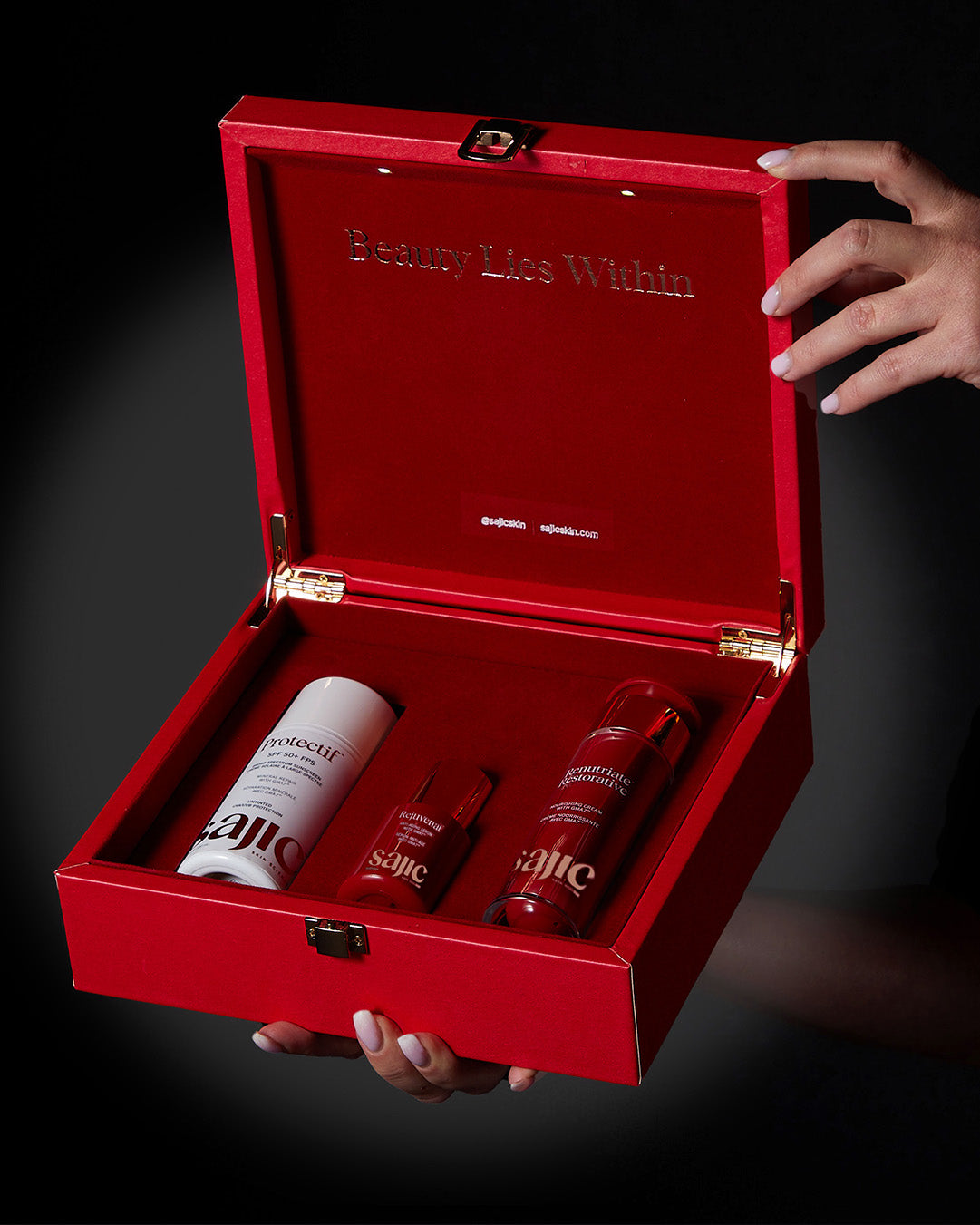
Renutriate restorative moisturiser with GMA7-delivered bakuchiol
---
Bakuchiol vs retinol: when to choose which
The question patients actually ask is "which one should I use?" The honest answer depends on skin tolerance, life stage, and treatment goal. Both ingredients have peer-reviewed evidence. The decision is rarely about who wins on a chart. It is about who can use which consistently.

When does bakuchiol win?
- Sensitive, reactive, or rosacea-prone skin. The Dhaliwal trial showed significantly fewer scaling, stinging, and erythema reports in the bakuchiol arm (Dhaliwal et al., 2019).
- Pregnancy and breastfeeding. Bakuchiol is the standard recommended alternative to topical retinoids during these periods.
- AM use. Bakuchiol does not show retinol's photolability, allowing morning application alongside vitamin C and SPF.
- Stacking with AHAs. Patients running glycolic or lactic acid protocols tolerate bakuchiol layering more reliably than retinol.
When does retinol win?
- Established tolerance and deeper photoaging. Retinol's evidence base for moderate to severe photoaging is far broader, with multi-year RCT data (Kafi et al., 2007, Archives of Dermatology).
- Speed of measurable result. At equivalent concentrations, retinol's track record on faster wrinkle delta in tolerant skin is more extensively documented.
- Long-term outcomes. Five-, ten-, and twenty-year clinical experience with retinol exists. Bakuchiol's longest published trials are still measured in months.
Can you use both?
Yes, and many of my patients do. The two compounds engage overlapping pathways through different routes (Chaudhuri and Bojanowski, 2014). The combination protocol I run most often in clinic is bakuchiol AM and retinol PM, alternating retinol nights for sensitive patients. The benefit is dose without the cumulative irritation that drives most patients to abandon their retinol within 90 days.
What is the honest bottom line?
The best anti-aging product is the one a patient actually applies for the next two years. Tolerability is not a consolation prize. It is the difference between a routine that works and one that sits in the bathroom cabinet.
Citation capsule: Bakuchiol matches retinol on 12-week wrinkle and hyperpigmentation reduction with significantly better tolerability (Dhaliwal et al., 2019, British Journal of Dermatology). Retinol retains a deeper long-term evidence base (Kafi et al., 2007, Archives of Dermatology). The right choice depends on skin tolerance, life stage, and consistency of use.
Sajic clinical evaluation of bakuchiol anti-aging moisturizer
---
Frequently asked questions
Is bakuchiol stronger than retinol?
No. The peer-reviewed evidence supports clinical equivalence at 12 weeks on wrinkles and hyperpigmentation, not superiority (Dhaliwal et al., 2019, British Journal of Dermatology, PMID 29947134). Where bakuchiol clearly wins is tolerability: significantly fewer scaling, stinging, and erythema reports in the same trial.
How long does bakuchiol take to work?
Most patients report tolerability and texture changes by week 4 to 6. Measurable wrinkle and hyperpigmentation reduction is most reliably documented at 12 weeks, which is the Dhaliwal trial endpoint (Dhaliwal et al., 2019). Plan for a 90-day commitment before judging the result.
Can you use bakuchiol every day?
Yes. The Dhaliwal trial used twice daily application without significant tolerability issues (Dhaliwal et al., 2019). Unlike retinol, bakuchiol does not show meaningful photolability, so AM and PM use is supported. Daily SPF still applies regardless of which active you choose (Hughes et al., 2013, Annals of Internal Medicine).
Is bakuchiol safe during pregnancy?
Bakuchiol is not a retinoid and is the standard recommended alternative to topical retinoids in pregnancy and breastfeeding. Large pregnancy-specific safety trials do not yet exist. Topical retinoids are conventionally avoided in pregnancy because of related systemic risk profiles (Loureiro et al., 2005, Reproductive Toxicology). Confirm any pregnancy skincare decision with your obstetrician.
Can you use bakuchiol with vitamin C?
Yes. There is no published antagonism between bakuchiol and L-ascorbic acid or its stable derivatives. They engage different pathways and are commonly stacked, with vitamin C in the AM and bakuchiol in the AM or PM. This is one of bakuchiol's practical advantages over retinol, which is more often kept separate from acidic vitamin C formulations.
Can you use bakuchiol and retinol together?
Yes. The two are additive, not antagonistic (Chaudhuri and Bojanowski, 2014, International Journal of Cosmetic Science). Many tolerant-skin patients run bakuchiol AM and retinol PM. Sensitive-skin patients do better alternating retinol nights with bakuchiol nights rather than layering both on the same evening.
What concentration of bakuchiol is most effective?
Peer-reviewed clinical evidence supports the 0.5% to 1.0% range. The Dhaliwal trial used 0.5% twice daily (Dhaliwal et al., 2019). Concentrations above 2% are not better characterised in the published literature and can compromise formulation stability. Delivery system and formulation quality matter as much as raw percentage.
---
About the author
Dr. Dusan Sajic, MD, FRCPC, FAAD is a board-certified dermatologist with 22+ years of clinical practice, Past President of CLASS (Canadian Laser and Aesthetic Specialists Society), TEDx speaker, and inventor of GMA7 (Genoplex Microdelivery Activator). He founded Sajic Skin Science in 2007 and continues to lead product development from his clinic in Ontario, Canada. Read the full founder profile.
Last reviewed: 2026-05-29 by Dr. Dusan Sajic, MD, FRCPC, FAAD.
---
References
- Dhaliwal S, Rybak I, Ellis SR, Notay M, Trivedi M, Burney W, Vaughn AR, Nguyen M, Reiter P, Bosanac S, Yan H, Foolad N, Sivamani RK. Prospective, randomized, double-blind assessment of topical bakuchiol and retinol for facial photoaging. British Journal of Dermatology. 2019;180(2):289-296. PMID 29947134. DOI 10.1111/bjd.16918. https://pubmed.ncbi.nlm.nih.gov/29947134/
- Chaudhuri RK, Bojanowski K. Bakuchiol: a retinol-like functional compound revealed by gene expression profiling and clinically proven to have anti-aging effects. International Journal of Cosmetic Science. 2014;36(3):221-230. PMID 24471735. https://pubmed.ncbi.nlm.nih.gov/24471735/
- Sajic D, et al. Clinical Evaluation of a Nature-Based Bakuchiol Anti-Aging Moisturizer for Sensitive Skin. Journal of Cosmetic Dermatology. 2021. PMID 33740839. DOI 10.1111/jocd.14084. https://pubmed.ncbi.nlm.nih.gov/33740839/
- Adhikari S, Joshi R, Patro BS, Ghanty TK, Chintalwar GJ, Sharma A, Chattopadhyay S, Mukherjee T. Antioxidant activity of bakuchiol: experimental evidences and theoretical treatments on the possible involvement of the terpenoid chain. Phytotherapy Research. 2003. PMID 12648815. https://pubmed.ncbi.nlm.nih.gov/12648815/
- Franceschi C, Campisi J. Chronic inflammation (inflammaging) and its potential contribution to age-associated diseases. Journals of Gerontology Series A. 2014;69 Suppl 1:S4-9. PMID 24833586. https://pubmed.ncbi.nlm.nih.gov/24833586/
- Hughes MC, Williams GM, Baker P, Green AC. Sunscreen and prevention of skin aging: a randomized trial. Annals of Internal Medicine. 2013;158(11):781-790. PMID 23732711. https://pubmed.ncbi.nlm.nih.gov/23732711/
- Kafi R, Kwak HS, Schumacher WE, Cho S, Hanft VN, Hamilton TA, King AL, Neal JD, Varani J, Fisher GJ, Voorhees JJ, Kang S. Improvement of naturally aged skin with vitamin A (retinol). Archives of Dermatology. 2007;143(5):606-612. PMID 17515510. https://pubmed.ncbi.nlm.nih.gov/17515510/
- Loureiro KD, Kao KK, Jones KL, Alvarado S, Chavez C, Dick L, Felix R, Johnson D, Chambers CD. Minor malformations characteristic of the retinoic acid embryopathy and other birth outcomes in children of women exposed to topical tretinoin during early pregnancy. Reproductive Toxicology. 2005. PMID 16164767. https://pubmed.ncbi.nlm.nih.gov/16164767/
- Chopra B, Dhingra AK, Dhar KL. Psoralea corylifolia L. (Buguchi): folklore to modern evidence: review. Fitoterapia / Journal of Ethnopharmacology context. 2013. PMID 24319278. https://pubmed.ncbi.nlm.nih.gov/24319278/
- Bos JD, Meinardi MM. The 500 Dalton rule for the skin penetration of chemical compounds and drugs. Experimental Dermatology. 2000;9(3):165-9. PMID 10839713. https://pubmed.ncbi.nlm.nih.gov/10839713/


